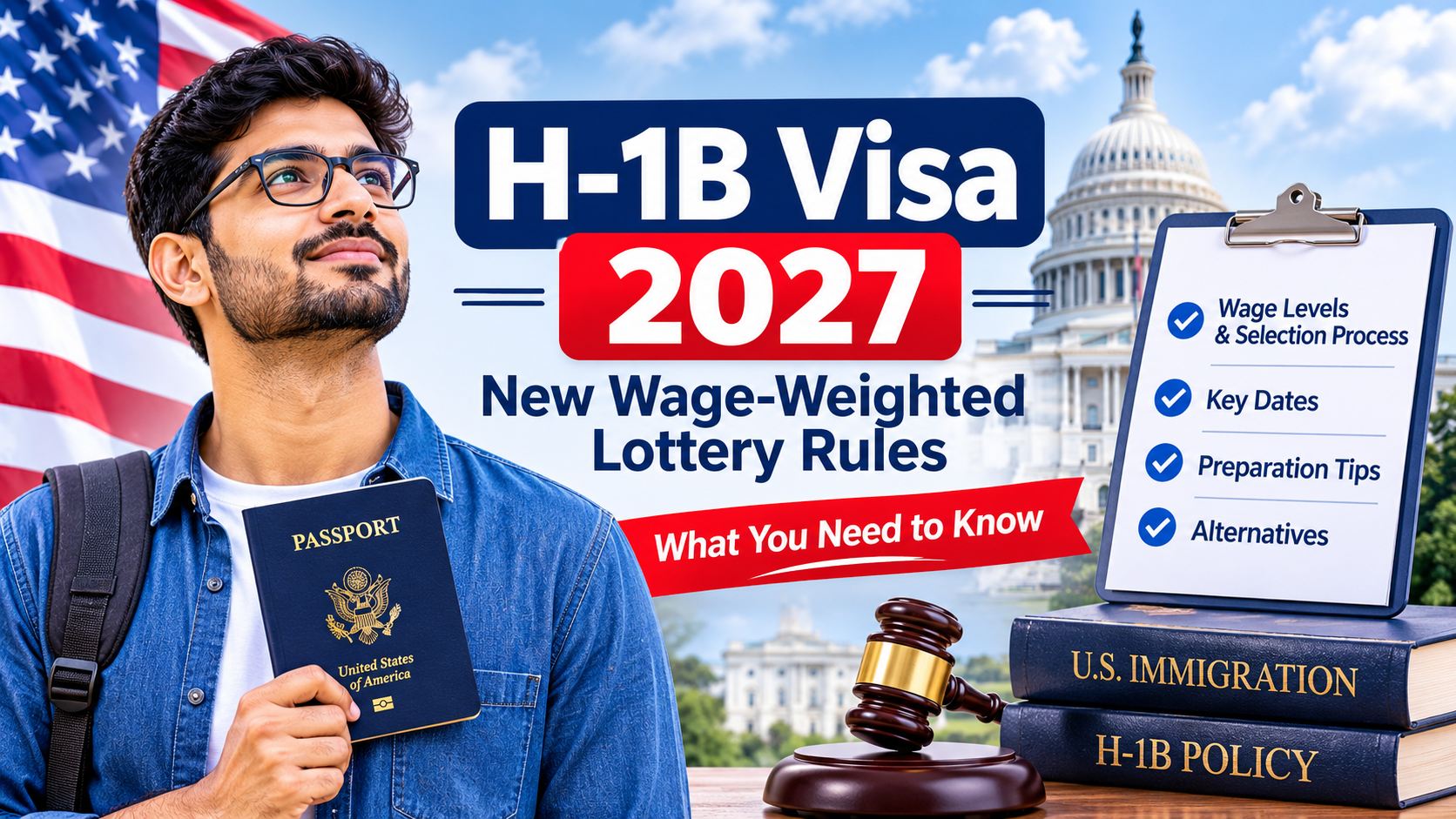
Focus Keyword: H-1B Visa 2027
Secondary Keywords: H-1B Lottery 2027, H-1B Visa Process, H-1B Wage Levels, H-1B Sponsorship, H-1B Immigration Updates, H-1B Visa Consultants
Introduction
The H-1B visa program continues to play an important role in connecting skilled international professionals with employment opportunities in the United States. From software engineers and data scientists to healthcare professionals and financial specialists, thousands of workers rely on this employment-based visa category to pursue their American career goals.
However, the H-1B immigration process is evolving. One of the biggest developments for the FY 2027 H-1B season is the introduction of a wage-weighted selection system, which changes how registrations are selected when demand exceeds the annual visa limits.
For applicants, employers, and immigration professionals, understanding these changes is essential for preparing a stronger and more informed H-1B strategy.
1. Understanding the New H-1B Wage-Weighted Lottery System
Traditionally, the H-1B lottery used a random selection process when USCIS received more registrations than the available annual visa numbers.
Beginning with the FY 2027 cap season, the selection process changed to a wage-weighted model.
Under this system, registrations associated with higher Department of Labor Occupational Employment and Wage Statistics (OEWS) wage levels receive more entries in the selection pool.
The weighting generally works as follows:
- Wage Level I: One entry.
- Wage Level II: Two entries.
- Wage Level III: Three entries.
- Wage Level IV: Four entries.
This means higher wage levels receive greater selection weight, although applicants at every wage level remain eligible.
The system makes job classification, offered salary, work location, and prevailing wage information particularly important during the registration process.
2. Why Wage Levels Matter More Than Ever
Wage levels are determined using factors such as the occupation, job location, and prevailing wage information.
Employers must carefully evaluate the offered position and select the appropriate Occupational Employment and Wage Statistics wage level.
For example, two software engineers working in different cities may have different prevailing wage requirements because local labor market conditions vary.
Important factors include:
- Job responsibilities and required qualifications.
- Standard Occupational Classification (SOC) code.
- Area of intended employment.
- Offered salary.
- Applicable prevailing wage information.
Applicants should understand that a higher salary alone does not automatically guarantee a higher wage level. The classification must accurately reflect the position and applicable wage requirements.
3. What the New Lottery Means for International Professionals
The updated selection system makes preparation more important for professionals seeking H-1B sponsorship.
Candidates should focus on several areas before the next registration season:
Build Relevant Professional Experience
Developing industry-specific experience and technical expertise can strengthen your employment profile.
Find the Right Sponsoring Employer
A legitimate employer with a genuine position and a clear understanding of H-1B requirements is essential.
Understand Your Job Classification
Your job title, responsibilities, SOC code, and work location should accurately reflect the position being offered.
Prepare Your Documentation
Keep educational records, employment history, passport information, and other relevant documents organized.
Understand the Selection Process
Selection is not guaranteed, even at the highest wage level. Applicants should maintain realistic expectations and explore alternative immigration options when appropriate.
4. Important FY 2027 H-1B Dates and Developments
The FY 2027 H-1B cap season introduced several important milestones.
- January 30, 2026: USCIS announced the registration schedule.
- March 4–19, 2026: Initial electronic registration period.
- March 31, 2026: USCIS announced completion of the initial selection process.
- April 1, 2026: Selected employers could begin filing cap-subject H-1B petitions.
- July 2026: USCIS confirmed that the FY 2027 H-1B numerical cap had been reached.
The annual H-1B cap generally includes 65,000 regular cap numbers and an additional 20,000 numbers for qualifying individuals holding advanced degrees from U.S. institutions.
Applicants planning for the next cap season should monitor official USCIS announcements because future registration dates and requirements may change.
5. Common H-1B Mistakes Applicants and Employers Should Avoid
Even small mistakes can create complications during the immigration process.
Here are some common issues worth avoiding:
Incorrect Job Classification: An inaccurate SOC code or wage level can create problems with registration and petition consistency.
Unverified Sponsorship Offers: Applicants should carefully verify employers and job opportunities before sharing personal information or paying any requested fees.
Incomplete Documentation: Missing educational or employment documents can delay petition preparation.
Misunderstanding Lottery Selection: A selected registration is not the same as an approved H-1B petition.
Ignoring Immigration Deadlines: Missing an applicable filing deadline can affect eligibility.
Preparation and accurate information are important throughout the process.
6. Alternatives to Consider if You Are Not Selected
The H-1B lottery is competitive, and selection is never guaranteed. However, not being selected does not necessarily mean the end of your U.S. career plans.
Depending on individual eligibility, applicants may explore:
- O-1 Visa: For individuals who can demonstrate extraordinary ability in their field.
- L-1 Visa: For qualifying employees transferring within an international company.
- F-1 OPT and STEM OPT: For eligible international students pursuing practical training in the United States.
- Cap-Exempt H-1B: Certain qualifying employers, including eligible institutions of higher education and nonprofit research organizations, may sponsor H-1B workers outside the regular cap.
- Other Employment-Based Immigration Options: Depending on qualifications and circumstances, other visa or permanent residence pathways may be available.
Each immigration category has separate eligibility requirements and should be evaluated based on individual circumstances.
7. How H1BRelief Helps Applicants Navigate the Immigration Journey
Navigating U.S. immigration requirements can be confusing, especially when policies and selection procedures change.
H1BRelief aims to help individuals better understand H-1B immigration information, application requirements, sponsorship considerations, and important policy developments.
Whether you are preparing for an upcoming H-1B season, researching employer sponsorship, or exploring alternative immigration pathways, having access to clear and reliable information can help you make more informed decisions.
Stay informed, organize your documents, understand the applicable requirements, and consult a qualified immigration attorney when you need advice about your individual circumstances.
Conclusion
The introduction of the wage-weighted H-1B lottery represents an important change in the U.S. employment-based immigration landscape.
For FY 2027, wage levels, job classifications, employer information, and accurate registration details became even more significant.
As future H-1B seasons approach, applicants and employers should stay updated on official USCIS announcements and prepare their documentation well in advance.
The best immigration strategy starts with accurate information, careful preparation, and a clear understanding of available opportunities.
Planning your H-1B journey? Stay connected with H1BRelief for useful immigration insights, H-1B updates, and practical guidance.
- H-1B Visa Process
- H-1B Visa Sponsorship
- H-1B Visa Requirements
- H-1B Visa Alternatives
Comments