Introduction
The H-1B visa remains an important pathway for U.S. employers seeking specialized international talent in fields such as technology, engineering, finance, healthcare, and scientific research. However, immigration planning in 2026 requires more than preparing application documents and waiting for registration results.
Employers must understand updated selection procedures, filing requirements, wage-related considerations, and the potential financial implications of changing immigration policies. Professionals pursuing opportunities in the United States also need to understand how their qualifications, job offers, and immigration status fit into the process.
For businesses and foreign professionals, staying informed is essential to making better decisions and avoiding preventable documentation errors.
In this guide, H1BRelief explores important H-1B visa considerations for 2026, practical preparation strategies, and the steps employers can take to manage immigration responsibilities more effectively.
1. Understanding the H-1B Visa Program in 2026
The H-1B visa allows qualifying U.S. employers to employ foreign professionals temporarily in specialty occupations that meet applicable eligibility requirements.
These positions generally require the application of specialized knowledge and a qualifying degree or equivalent credentials, depending on the specific occupation and circumstances.
Common industries employing H-1B professionals include:
- Information technology and software development
- Engineering and technical services
- Financial services and analytics
- Scientific research
- Certain healthcare-related occupations
- Data science and other specialized professional fields
Employers must establish that the position and prospective employee meet the relevant requirements. A job title alone does not determine whether a position qualifies.
Understanding these requirements early helps employers and applicants prepare more effectively.
2. What Has Changed for the H-1B Visa Process in 2026?
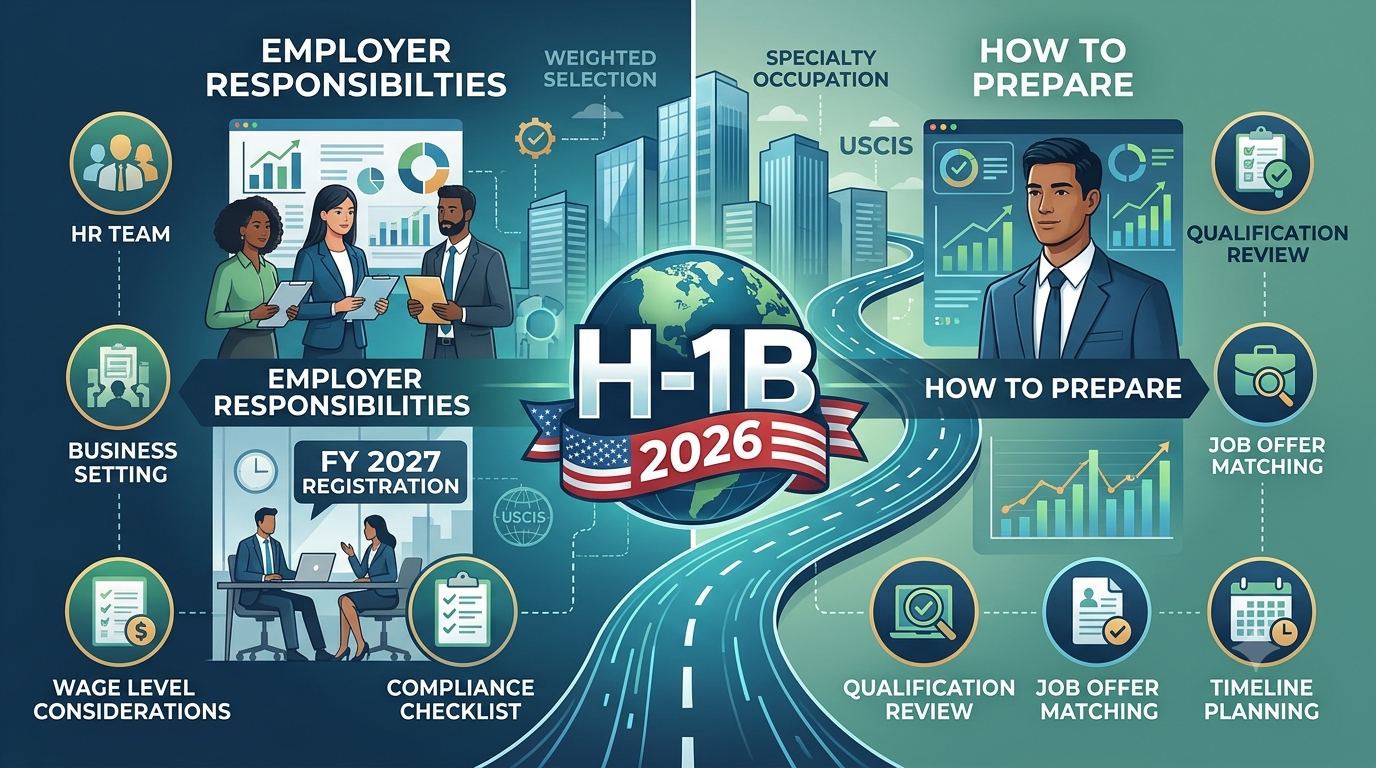
One of the most important developments is the introduction of a weighted selection process for the FY 2027 H-1B cap season.
According to U.S. Citizenship and Immigration Services (USCIS), the updated selection rule became effective on February 27, 2026. When properly submitted registrations exceed the available cap, the new process generally gives greater weight to higher wage levels while maintaining opportunities across wage levels. The FY 2027 registration period took place in March 2026.
Employers should understand the following considerations:
Weighted registration selection
Employers must provide accurate information relevant to the registration, including the occupational classification, intended employment location, and applicable wage-level information.
The selection framework makes accurate job and compensation planning particularly important.
Registration does not guarantee approval
Being selected in the registration process only makes an eligible employer able to proceed with the applicable petition. It does not guarantee that USCIS will approve the petition or that a visa will be issued.
Petition documentation remains essential
Employers must prepare evidence supporting the offered position, the beneficiary’s qualifications, and all applicable eligibility requirements.
Additional policy developments
Certain federal immigration measures announced in 2025 may affect the cost or eligibility of specific H-1B petitions. Their applicability depends on the circumstances and current official guidance. Employers should verify whether any additional payment requirement applies before filing.
Important: Immigration policies can change. Employers and applicants should confirm the latest requirements through USCIS and qualified immigration counsel before making decisions.
3. H-1B Employer Compliance: What Businesses Should Review
Employers sponsoring foreign professionals must pay attention to more than the registration process.
A well-organized compliance process helps reduce inconsistencies between the registration, employment offer, supporting documents, and final petition.
Important areas to review include:
Job responsibilities: The duties should accurately reflect the actual position and its specialized requirements.
Employee qualifications: Educational credentials, relevant experience, and any required e
Comments