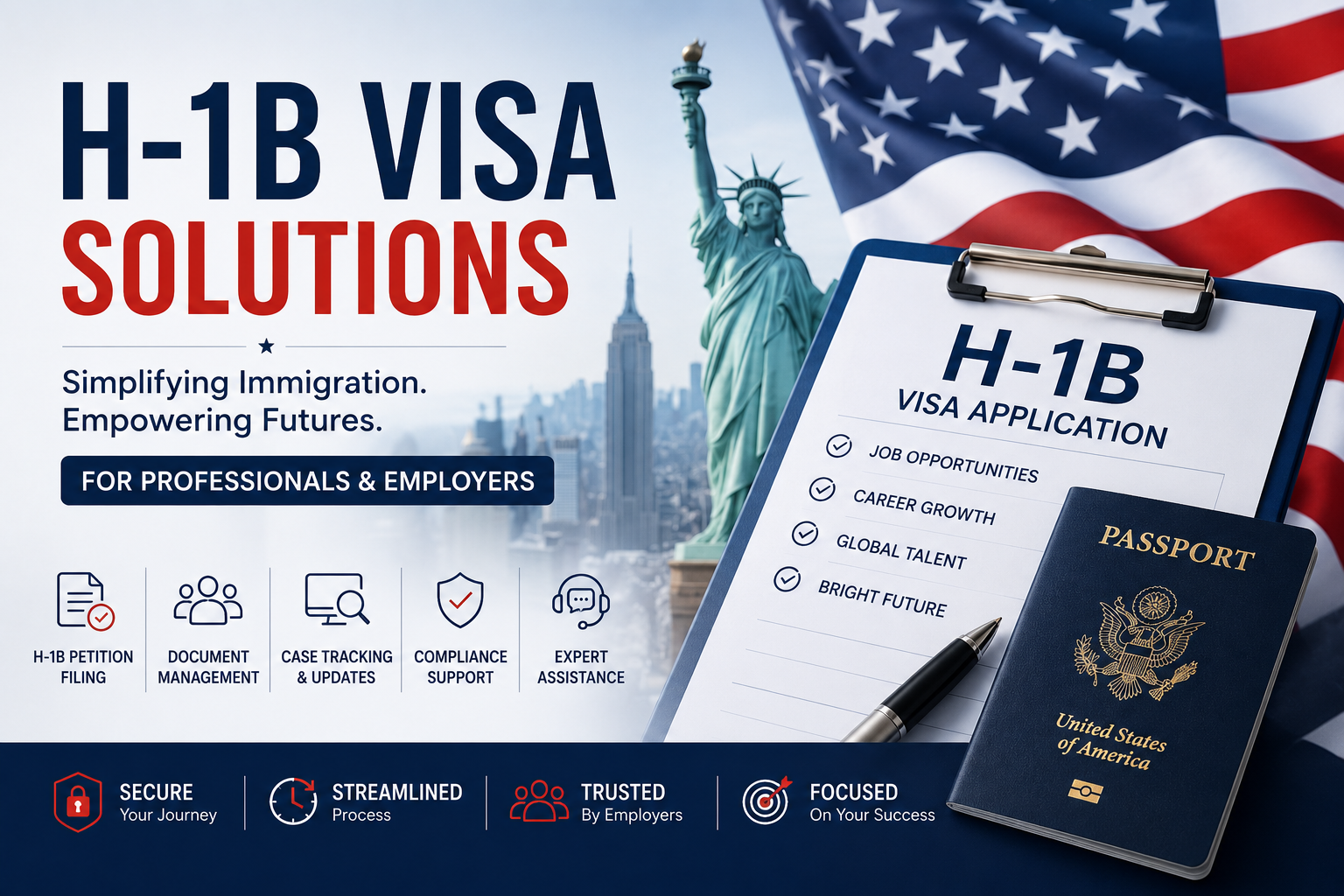
The H-1B visa remains one of the most sought-after work visas for skilled professionals who want to build a career in the United States. It also enables U.S. employers to fill specialized roles with qualified talent from around the world.
As technology, healthcare, engineering, finance, and research industries continue to face talent shortages, the H-1B program plays an important role in connecting businesses with highly skilled professionals.
Whether you’re an employer looking to hire international talent or a professional planning to work in the U.S., understanding the H-1B process is essential.
What Is an H-1B Visa?
The H-1B is a non-immigrant work visa that allows U.S. employers to temporarily employ foreign professionals in specialty occupations that require specialized knowledge and at least a bachelor’s degree or its equivalent.
Common H-1B professions include:
- Software Engineers
- AI & Machine Learning Engineers
- Data Scientists
- Cybersecurity Specialists
- Doctors
- Pharmacists
- Financial Analysts
- Civil Engineers
- Mechanical Engineers
- Architects
- University Professors
Who Can Apply?
An applicant generally must:
- Hold a bachelor’s degree or higher (or equivalent experience)
- Have a job offer from a U.S. employer
- Work in a specialty occupation
- Meet licensing requirements if applicable
The employer must sponsor the H-1B petition.
Industries That Commonly Hire H-1B Professionals
Many industries rely on global talent, including:
Information Technology
- Software Development
- Artificial Intelligence
- Cloud Computing
- Cybersecurity
- Mobile App Development
Healthcare
- Physicians
- Nurses (certain specialties)
- Medical Researchers
- Pharmacists
Engineering
- Civil Engineering
- Electrical Engineering
- Mechanical Engineering
- Chemical Engineering
Finance
- Financial Analysts
- Investment Specialists
- Risk Analysts
Education & Research
- Universities
- Research Institutions
- Scientific Organizations
H-1B Application Process
Although every case is unique, the general process includes:
1. Job Offer
A U.S. employer offers a position that qualifies as a specialty occupation.
2. Labor Condition Application (LCA)
The employer files a Labor Condition Application with the U.S. Department of Labor, confirming compliance with wage and workplace requirements.
3. H-1B Petition
After the LCA is certified, the employer files Form I-129 with the appropriate supporting documentation.
4. USCIS Review
The petition is reviewed by U.S. Citizenship and Immigration Services (USCIS).
5. Approval
Once approved, the employee may begin working in accordance with the approved petition and applicable regulations.
Key Benefits of the H-1B Visa
Work in the United States
Gain professional experience with U.S.-based employers.
Competitive Compensation
Many specialty occupations offer attractive salaries and career advancement opportunities.
Family Benefits
Eligible dependents may qualify for H-4 status, allowing them to accompany the primary visa holder under applicable immigration rules.
Career Growth
Professionals gain exposure to cutting-edge technologies, international projects, and global work environments.
Pathway to Long-Term Employment
Many employers support eligible H-1B employees through employment-based permanent residence processes when appropriate.
Common Challenges
Applicants and employers may encounter challenges such as:
- Annual cap limitations
- Lottery selection (for cap-subject petitions)
- Documentation requirements
- Processing timelines
- Requests for Evidence (RFEs)
- Compliance obligations
Working with experienced immigration professionals can help reduce errors and delays.
Employer Responsibilities
Employers sponsoring H-1B workers should:
- Follow applicable wage requirements
- Maintain required documentation
- Comply with Department of Labor regulations
- Notify relevant agencies of material employment changes when required
- Maintain ongoing immigration compliance
Best Practices for Applicants
To improve preparedness:
- Keep educational records organized
- Maintain updated resumes
- Preserve employment history
- Respond promptly to documentation requests
- Monitor important filing deadlines
- Stay informed about immigration policy updates
Technology Is Transforming Immigration Support
Modern immigration service platforms increasingly provide:
- Secure online document management
- Case tracking dashboards
- Automated reminders
- Digital form preparation
- Employer collaboration portals
- Secure document sharing
- Status notifications
These digital tools improve transparency and simplify communication throughout the immigration process.
Why Businesses Need Professional H-1B Support
Managing immigration cases internally can be complex.
Professional H-1B support can help businesses:
- Prepare documentation
- Improve filing accuracy
- Track case progress
- Maintain compliance
- Coordinate with legal professionals
- Manage employee onboarding efficiently
Trends Shaping H-1B Services in 2026
Organizations are adopting:
- AI-assisted document review
- Secure cloud-based case management
- Digital onboarding
- Automated compliance tracking
- Data-driven workforce planning
- Employer self-service portals
- Electronic document workflows
- Analytics for immigration management
How H1B Relief Supports Employers and Professionals
Platforms focused on H-1B services can simplify the immigration journey by offering:
- H-1B case management
- Document organization
- Employer support
- Compliance guidance
- Status tracking
- Workflow automation
- Secure communication
- Ongoing assistance throughout the process
Conclusion
The H-1B visa continues to be an important pathway for skilled professionals seeking opportunities in the United States and for employers addressing specialized talent needs.
With evolving immigration policies and documentation requirements, careful preparation and efficient case management are more important than ever. Whether you’re an employer expanding your workforce or a professional pursuing an international career, understanding the H-1B process can help you make informed decisions and improve your chances of a successful application.
Frequently Asked Questions
What is an H-1B visa?
An H-1B visa allows U.S. employers to temporarily hire qualified foreign professionals in specialty occupations that typically require specialized knowledge and a bachelor’s degree or higher.
Who files the H-1B petition?
The U.S. employer files the H-1B petition on behalf of the employee.
Can family members accompany an H-1B visa holder?
Yes. Eligible spouses and unmarried children may qualify for H-4 dependent status, subject to U.S. immigration rules.
Is the H-1B visa permanent?
No. It is a temporary non-immigrant work visa, although some holders may later pursue employment-based permanent residence through separate legal processes.
Why use an H-1B support platform?
A dedicated H-1B support platform can streamline document management, improve collaboration, track case progress, and help employers and applicants stay organized throughout the immigration process.
Comments