The H-1B visa remains one of the most important employment-based visa programs in the United States, enabling businesses to hire highly skilled foreign professionals in fields such as software development, artificial intelligence, healthcare, engineering, finance, and research.
Over the past few years, the U.S. government has introduced several policy changes and operational improvements intended to reduce processing delays, modernize the application system, and improve transparency. These changes are often referred to collectively as H-1B relief.
For employers, these developments can simplify hiring and workforce planning. For skilled professionals, they can mean a more predictable immigration process and better visibility into application status.
In this guide, we’ll explain what H-1B relief means, the recent improvements, and how technology is helping organizations manage immigration more efficiently.
What Is H-1B Relief?
H-1B relief refers to policy updates, administrative improvements, and procedural changes that aim to make the H-1B process more efficient and transparent.
These improvements may include:
- Faster processing procedures
- Digital filing enhancements
- Reduced paperwork
- Clearer eligibility guidelines
- Better fraud prevention
- Improved communication with applicants
- Enhanced transparency during the registration process
Rather than changing the core purpose of the H-1B program, these initiatives focus on improving how applications are submitted, reviewed, and managed.
Why H-1B Relief Matters
The demand for skilled professionals continues to grow across industries.
Organizations hiring talent in areas such as:
- Artificial Intelligence
- Machine Learning
- Software Development
- Cloud Computing
- Cybersecurity
- Data Science
- Healthcare Technology
- Financial Technology
often depend on the H-1B program to fill specialized roles.
Administrative improvements can help reduce uncertainty, allowing companies to plan hiring more effectively and helping qualified candidates navigate the process with greater confidence.
Key Areas of H-1B Relief
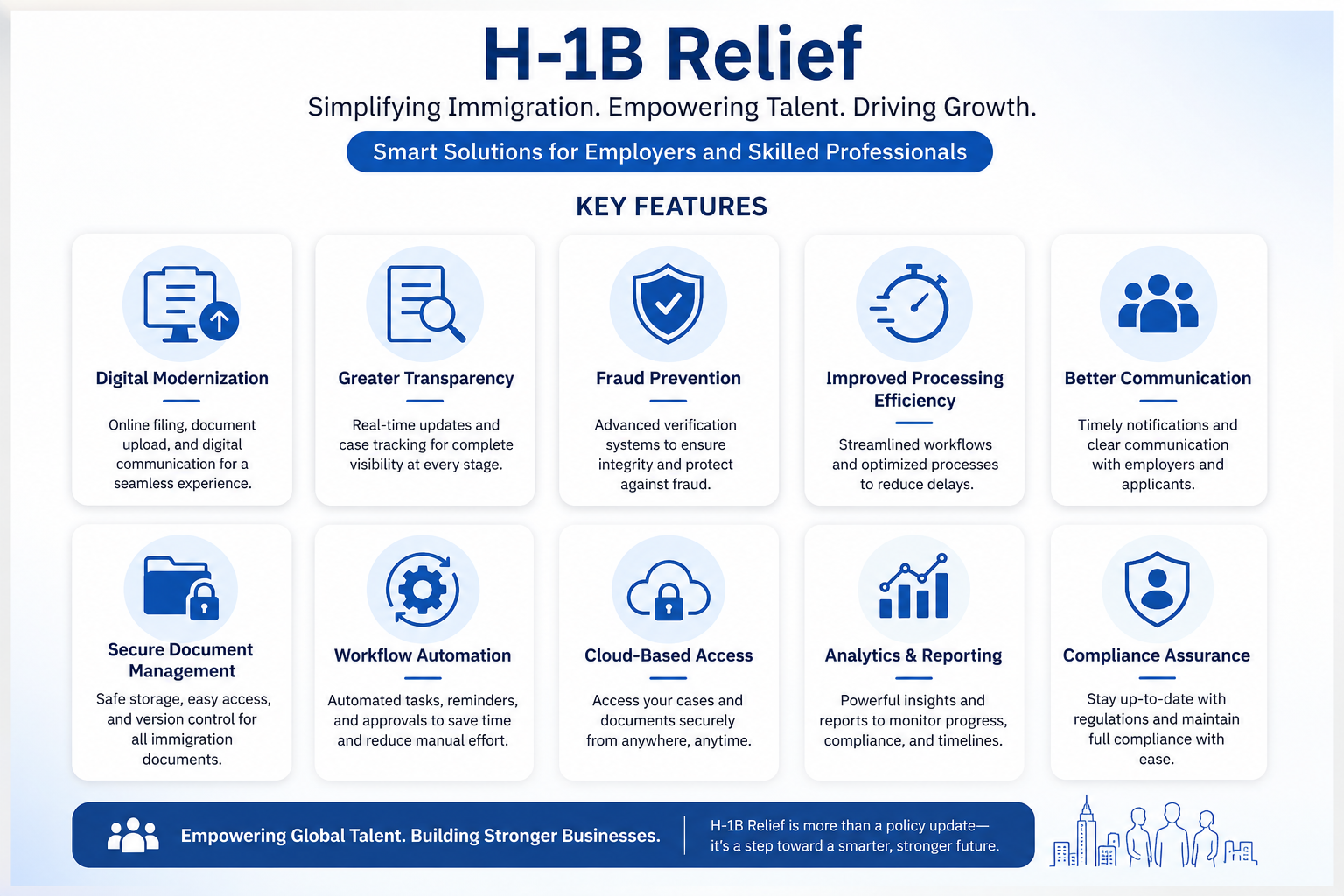
1. Digital Modernization
Immigration processes continue to move toward digital systems that improve efficiency and reduce manual paperwork.
Benefits include:
- Online submissions
- Digital case tracking
- Electronic notifications
- Secure document management
- Faster communication
2. Greater Transparency
Applicants and employers now have better visibility into various stages of the H-1B process, helping them prepare documentation and timelines more effectively.
Transparency helps reduce confusion and improves planning for both businesses and applicants.
3. Fraud Prevention
Modern verification systems and enhanced review procedures are designed to protect the integrity of the H-1B program.
These measures help ensure:
- Legitimate employers
- Genuine job opportunities
- Fair application review
- Improved compliance
4. Improved Processing Efficiency
While processing times can vary based on case type and workload, ongoing operational improvements are intended to streamline case management and reduce unnecessary delays.
Benefits for Employers
Organizations hiring international professionals may benefit from:
Access to Global Talent
Companies can recruit experienced professionals with specialized technical skills.
Better Workforce Planning
More predictable processes help organizations plan hiring timelines and project delivery.
Increased Productivity
Skilled employees contribute to innovation, product development, and business growth.
Competitive Advantage
Hiring qualified international professionals enables businesses to remain competitive in rapidly evolving industries.
Benefits for Skilled Professionals
Applicants may experience several advantages, including:
- Better application transparency
- Improved communication
- Simplified digital processes
- More predictable timelines
- Easier document management
- Reduced administrative complexity
Technology’s Role in H-1B Management
Modern technology platforms help organizations manage immigration workflows more efficiently.
Common capabilities include:
Document Management
- Secure document storage
- Version tracking
- Automated reminders
Workflow Automation
- Task assignments
- Deadline tracking
- Approval workflows
- Compliance monitoring
Cloud-Based Access
Authorized users can securely access application information from multiple locations.
Reporting and Analytics
Organizations can monitor:
- Application status
- Processing timelines
- Compliance metrics
- Workforce planning data
Common Challenges in H-1B Processing
Although improvements continue, employers and applicants may still encounter:
- Strict documentation requirements
- Annual visa caps
- Registration timelines
- Compliance obligations
- Changing regulations
- Complex case management
Preparation and accurate documentation remain essential.
Best Practices for Employers
To improve the H-1B process:
- Prepare documentation early
- Maintain accurate employee records
- Monitor filing deadlines
- Stay informed about regulatory updates
- Conduct internal compliance reviews
- Use secure digital document management systems
- Work with qualified immigration professionals when appropriate
How Software Can Simplify Immigration Workflows
Many organizations now use custom software solutions to streamline immigration-related operations.
Features may include:
- Digital document management
- Employee onboarding
- Workflow automation
- Secure cloud storage
- Notification systems
- Reporting dashboards
- Compliance tracking
- HR integration
- Audit trails
These tools help reduce manual effort and improve operational efficiency.
Future Trends
The future of immigration management is expected to include:
- AI-assisted document review
- Automated workflow management
- Digital identity verification
- Predictive analytics
- Cloud-first immigration platforms
- Enhanced cybersecurity
- Mobile-friendly application management
- Advanced compliance automation
Organizations investing in digital transformation will be better positioned to manage increasingly complex immigration processes.
Why Technology Partners Matter
Businesses often rely on technology partners to build secure, scalable solutions that integrate immigration workflows with HR, payroll, and document management systems.
Custom enterprise software can help organizations:
- Reduce administrative work
- Improve compliance tracking
- Enhance data security
- Increase operational efficiency
- Support long-term workforce planning
Why Choose QuartusTech?
At QuartusTech, we develop secure and scalable enterprise software solutions that help businesses automate complex workflows, manage sensitive data, and improve operational efficiency.
Our expertise includes:
- Enterprise Application Development
- HR & Workforce Management Solutions
- AI-Powered Automation
- Cloud Application Development
- Secure Document Management Systems
- Workflow Automation
- Mobile & Web Applications
- API Integration
- Data Analytics & Dashboards
We build technology that helps organizations simplify business operations while maintaining scalability and security.
Final Thoughts
H-1B relief represents ongoing efforts to improve the efficiency, transparency, and reliability of the H-1B program. While eligibility requirements and compliance obligations remain important, digital modernization and streamlined workflows are making the process easier to manage for both employers and skilled professionals.
Businesses that embrace technology-driven solutions can improve document management, automate repetitive tasks, and better prepare for workforce planning in an increasingly competitive global market.
Frequently Asked Questions
What is H-1B relief?
H-1B relief refers to policy changes and administrative improvements that aim to make the H-1B process more efficient, transparent, and user-friendly.
Does H-1B relief guarantee visa approval?
No. Applicants must still meet all legal eligibility requirements, and approval decisions are made based on applicable immigration laws and regulations.
Can employers use software to manage H-1B cases?
Yes. Many organizations use secure workflow automation, document management, and compliance tracking systems to streamline immigration-related processes.
How does digital transformation help with H-1B management?
Digital tools improve document organization, automate workflows, enhance security, and provide better visibility into application status.
Why is H-1B important for U.S. businesses?
The H-1B program allows employers to hire qualified professionals in specialized occupations, helping address skill shortages and support innovation across industries.
Comments