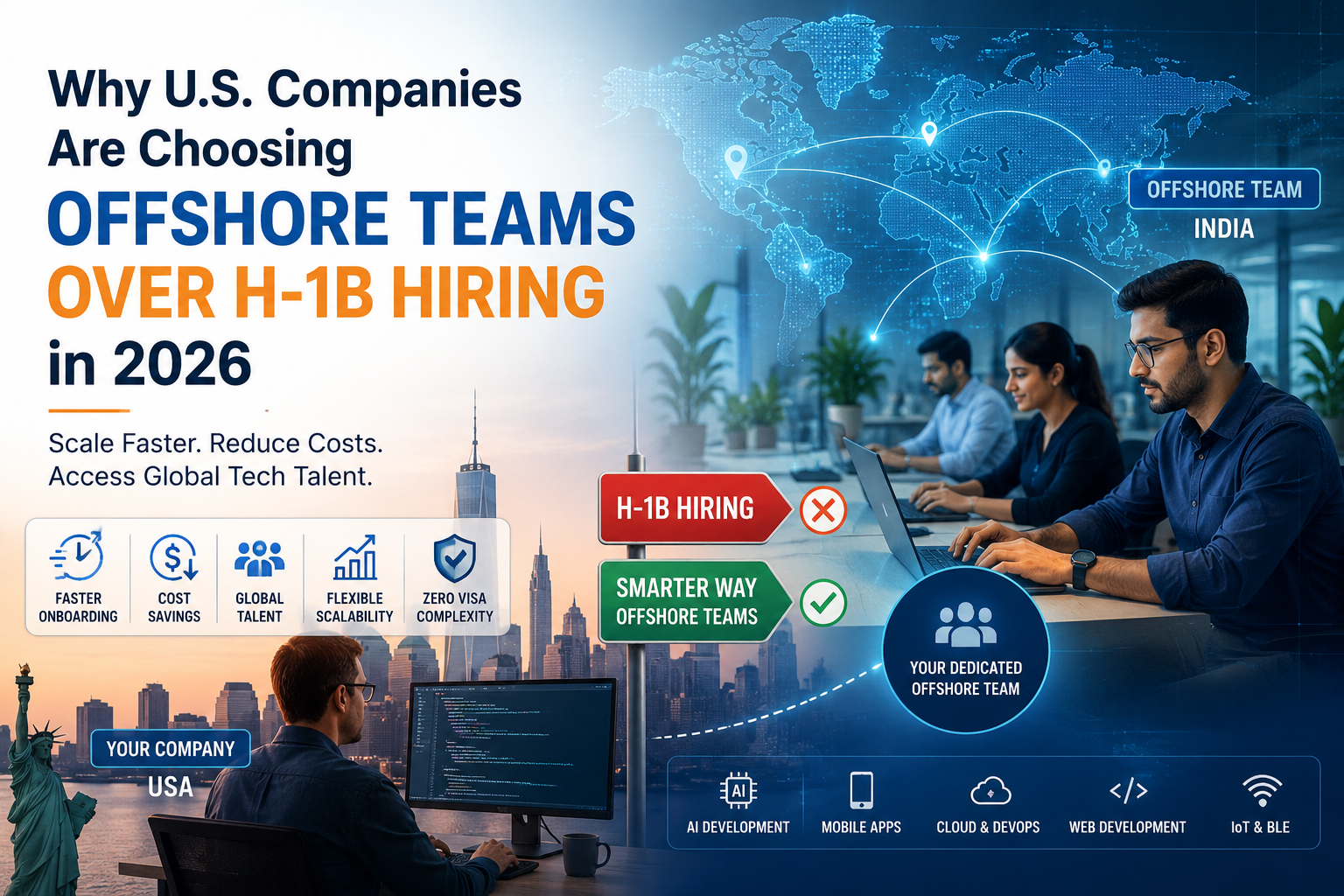
The U.S. tech industry has long depended on the H-1B visa program to hire skilled global talent. But in 2026, rising visa costs, changing immigration policies, lengthy approval timelines, and increasing compliance challenges are pushing businesses to rethink their hiring strategy. Many companies are now discovering a smarter, faster, and more scalable solution: offshore development teams.
Platforms like H1BRelief are helping U.S. businesses continue building world-class software products without getting trapped in immigration delays and escalating operational costs.
The Growing Challenges with H-1B Hiring
For years, the H-1B visa program enabled U.S. companies to hire highly skilled international professionals in technology, engineering, healthcare, and research. However, recent changes and growing uncertainties have made the process increasingly difficult.
Some of the biggest challenges companies face today include:
- Rising H-1B filing and compliance costs
- Increased scrutiny from USCIS
- Long processing delays
- Unpredictable lottery-based approvals
- Complex legal documentation requirements
- Additional interview and verification processes
Recent USCIS updates have introduced stricter filing requirements for Form I-129 submissions, increasing pressure on employers to maintain flawless compliance.
At the same time, many businesses are worried about proposed fee increases and policy uncertainty surrounding skilled worker immigration programs.
For startups and growing companies, these delays can directly impact product launches, innovation speed, and overall business growth.
Why Offshore Development Is Becoming the Preferred Alternative
Instead of waiting months for visa approvals, companies are increasingly partnering with offshore technology teams in India and other global tech hubs.
Offshore development offers several major advantages:
1. Faster Team Scaling
Companies can onboard experienced developers within days instead of waiting through visa lotteries and approval timelines.
2. Significant Cost Savings
Businesses reduce expenses related to:
- Visa sponsorship
- Legal fees
- Immigration compliance
- Relocation costs
- Employee onboarding
3. Access to Specialized Talent
Offshore teams provide access to highly skilled professionals in:
- Artificial Intelligence
- SaaS Development
- Mobile App Development
- Cloud Engineering
- IoT & BLE Development
- UI/UX Design
- DevOps & Automation
4. Flexible Team Structures
Businesses can hire:
- Dedicated developers
- Full offshore teams
- Project-based specialists
- Long-term technology partners
5. Time Zone Alignment
Modern offshore teams now work seamlessly with U.S. schedules using platforms like Slack, Zoom, and Microsoft Teams.
How H1BRelief Helps U.S. Businesses
H1BRelief, powered by Quartus Technology, helps companies overcome hiring bottlenecks by providing highly skilled offshore developers and technology teams from India.
Their expertise includes:
- AI Application Development
- SaaS Engineering
- Mobile App Development
- Web Development
- Cloud & DevOps Solutions
- BLE & IoT Development
- UI/UX Design
- Enterprise Software Solutions
With over 10 years of experience serving U.S. clients and delivering offshore projects globally, the company focuses on helping businesses scale quickly while reducing operational complexity.
The Industries Most Impacted by H-1B Challenges
Several industries are now rapidly adopting offshore development models, including:
- FinTech
- Healthcare Technology
- SaaS Platforms
- E-Commerce
- Logistics
- EdTech
- Aerospace
- IoT & Smart Device Companies
These industries often require highly specialized engineering talent that can be difficult and expensive to secure locally.
Real Concerns from the H-1B Community
Online discussions across immigration forums and communities reveal growing anxiety around visa delays, appointment shortages, employer compliance issues, and policy uncertainty.
Many professionals report:
- Long visa stamping delays
- Increased Requests for Evidence (RFEs)
- Transfer complications
- Uncertain travel policies
- Administrative processing issues
This uncertainty also affects employers who depend heavily on international hiring.
Offshore Teams Are No Longer “Outsourcing”
The modern offshore development model has evolved far beyond traditional outsourcing.
Today’s offshore teams operate as:
- Dedicated product teams
- Extension of in-house engineering departments
- Agile development partners
- Innovation-focused technology collaborators
With modern collaboration tools, real-time communication, and agile workflows, offshore teams can now integrate seamlessly into U.S.-based operations.
The Future of Global Tech Hiring
As immigration policies continue evolving, businesses are realizing that flexibility and scalability matter more than ever.
Instead of relying entirely on visa-dependent hiring models, companies are now building globally distributed teams that allow them to:
- Scale faster
- Reduce costs
- Access broader talent pools
- Launch products quicker
- Stay competitive in global markets
For many organizations, offshore development is no longer a backup option — it has become a core growth strategy.
Final Thoughts
The H-1B program remains important for the U.S. technology ecosystem, but growing uncertainty is forcing businesses to explore smarter alternatives.
Offshore development offers companies a practical path forward — delivering the same technical expertise, faster execution, and lower operational risk.
Platforms like H1BRelief are helping U.S. businesses adapt to this changing landscape by providing reliable offshore engineering teams that work as a true extension of their business.
As the global workforce continues evolving, companies that embrace flexible hiring models will be best positioned to innovate, scale, and succeed in the years ahead.
Comments